
HVAC, air conditioning and ventilation are terms frequently used when discussing commercial building services. Although they are closely related, they perform different functions, and understanding those differences can help businesses choose the right equipment, improve building performance and avoid unnecessary expenditure.
HVAC refers to the wider heating, ventilation and air conditioning system, while air conditioning primarily controls indoor temperature and ventilation supplies fresh air and removes stale air.
For facilities managers, business owners and commercial property managers, knowing how these systems work together is important when planning installations, upgrading equipment or arranging maintenance.
HVAC, Air Conditioning and Ventilation: The Key Differences
The simplest way to understand these systems is to look at their primary functions:
| System | Main Function | Typical Applications |
|---|---|---|
| HVAC | Combines heating, ventilation and cooling | Offices, hospitals, commercial buildings and industrial facilities |
| Air Conditioning | Controls indoor temperature and, depending on the system, humidity | Offices, retail premises, server rooms and workplaces |
| Ventilation | Introduces fresh air and removes stale or contaminated air | Commercial buildings, factories, kitchens and enclosed workplaces |
The important distinction is that air conditioning and ventilation can form part of an HVAC system, but they are not interchangeable.
A building may have effective air conditioning without sufficient fresh-air ventilation. Equally, a well-ventilated workplace may still require additional cooling during warmer conditions.
Understanding what each system provides is the first step towards identifying the most appropriate solution.
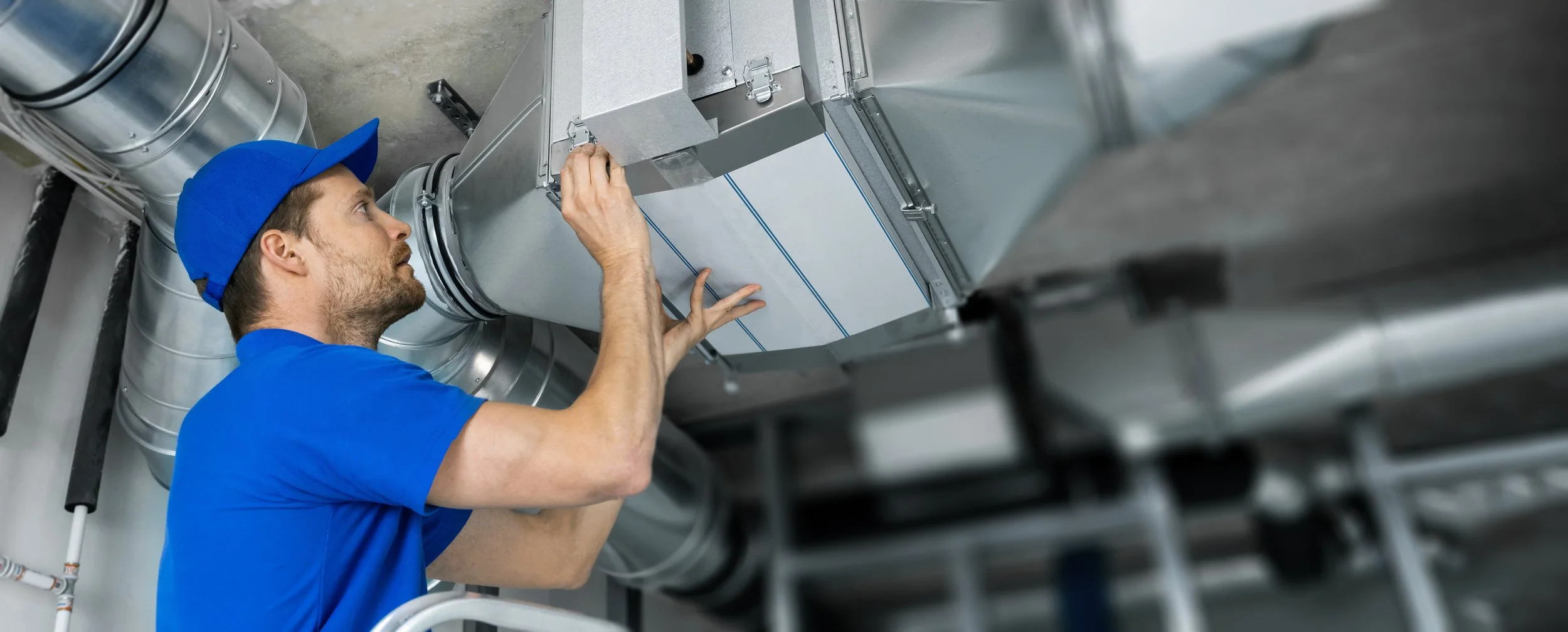
What Is an HVAC System and How Does It Work?
HVAC stands for Heating, Ventilation and Air Conditioning. It describes the systems used to manage indoor environmental conditions within a building.
Rather than referring to one specific piece of equipment, HVAC is an umbrella term covering several interconnected technologies.
In commercial environments, an HVAC installation may include:
Heating equipment: Heat pumps, boilers or other systems that provide warmth.
Air conditioning units: Equipment that removes heat to maintain suitable indoor temperatures.
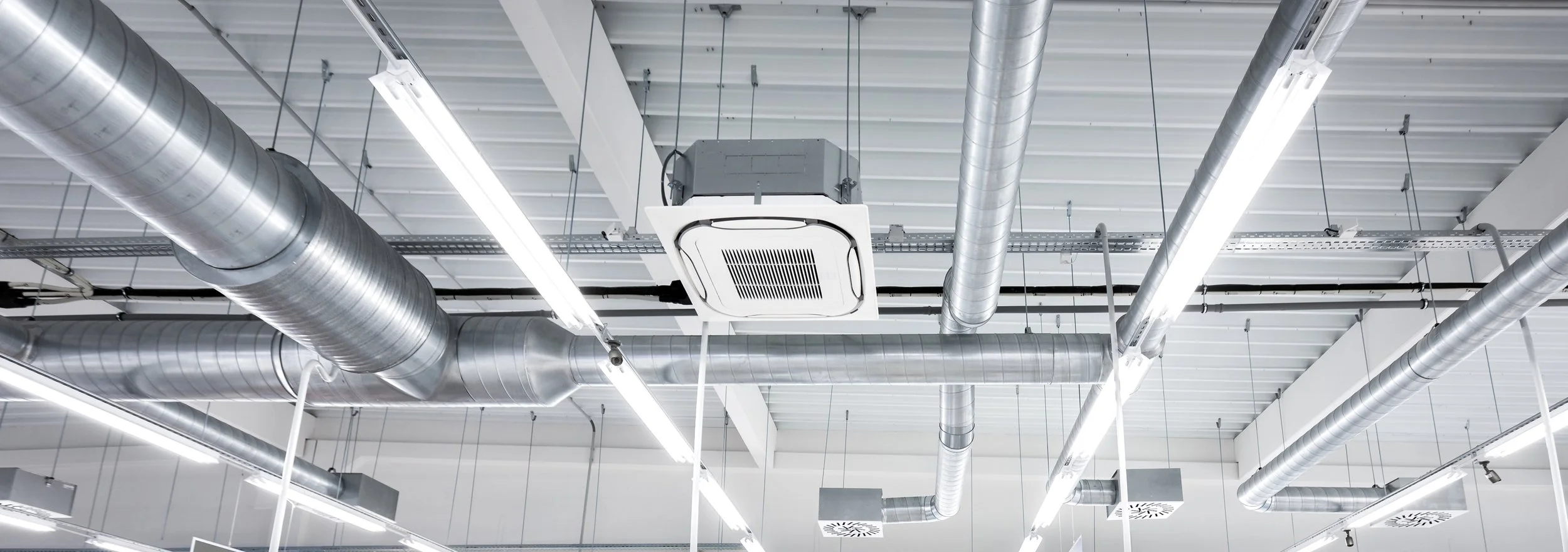
Ventilation systems: Fans, ductwork and air handling equipment that supply and extract air.
Air handling units (AHUs): Equipment that moves, filters and, where designed to do so, heats or cools air.
Control systems: Thermostats, sensors and building management systems that coordinate equipment operation.
Not every HVAC installation contains all these components. The exact arrangement depends on the building, occupancy, operating requirements and existing infrastructure.
Why Commercial Buildings Use Integrated HVAC Systems
Larger commercial properties often have different heating, cooling and ventilation requirements across individual areas.
For example, an office building may need heating in occupied spaces, cooling in meeting rooms and continuous ventilation throughout shared working areas.
Integrating these functions can make it easier to coordinate temperature control, airflow and equipment operation.
However, effective integration requires careful system design. Poorly coordinated controls can result in heating and cooling operating against one another, increasing energy consumption without improving comfort.
What Does an Air Conditioning System Actually Do?
Air conditioning systems primarily regulate indoor temperature by transferring heat from one location to another.
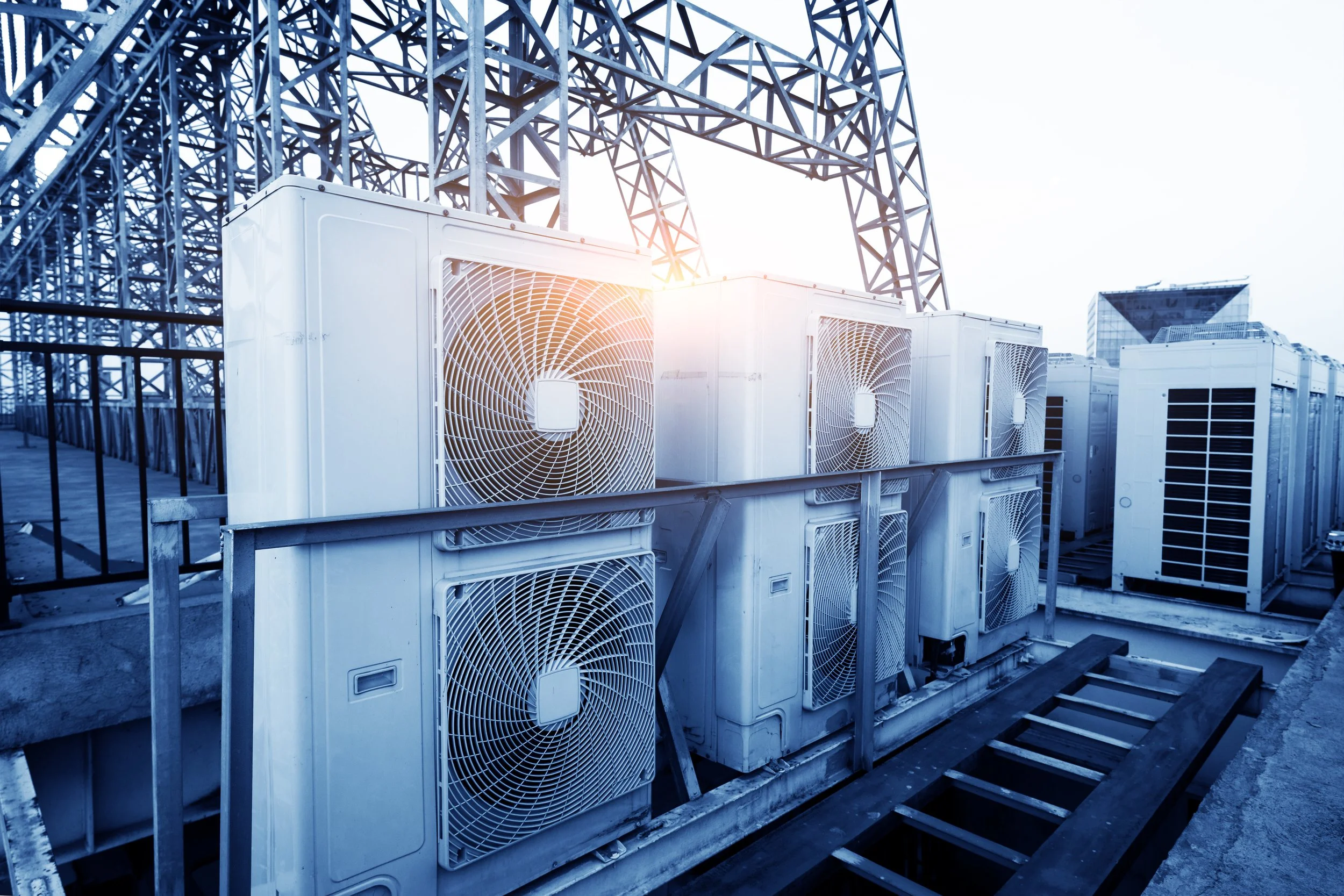
In cooling mode, refrigerant-based air conditioning equipment absorbs heat from the indoor environment and releases it elsewhere, usually outdoors.
Many modern systems can also provide heating by reversing the refrigeration cycle.
Commercial air conditioning equipment includes:
Split systems: Commonly used to control temperatures in individual rooms or smaller commercial spaces.
VRF and VRV systems: Suitable for buildings requiring independent temperature control across multiple areas.
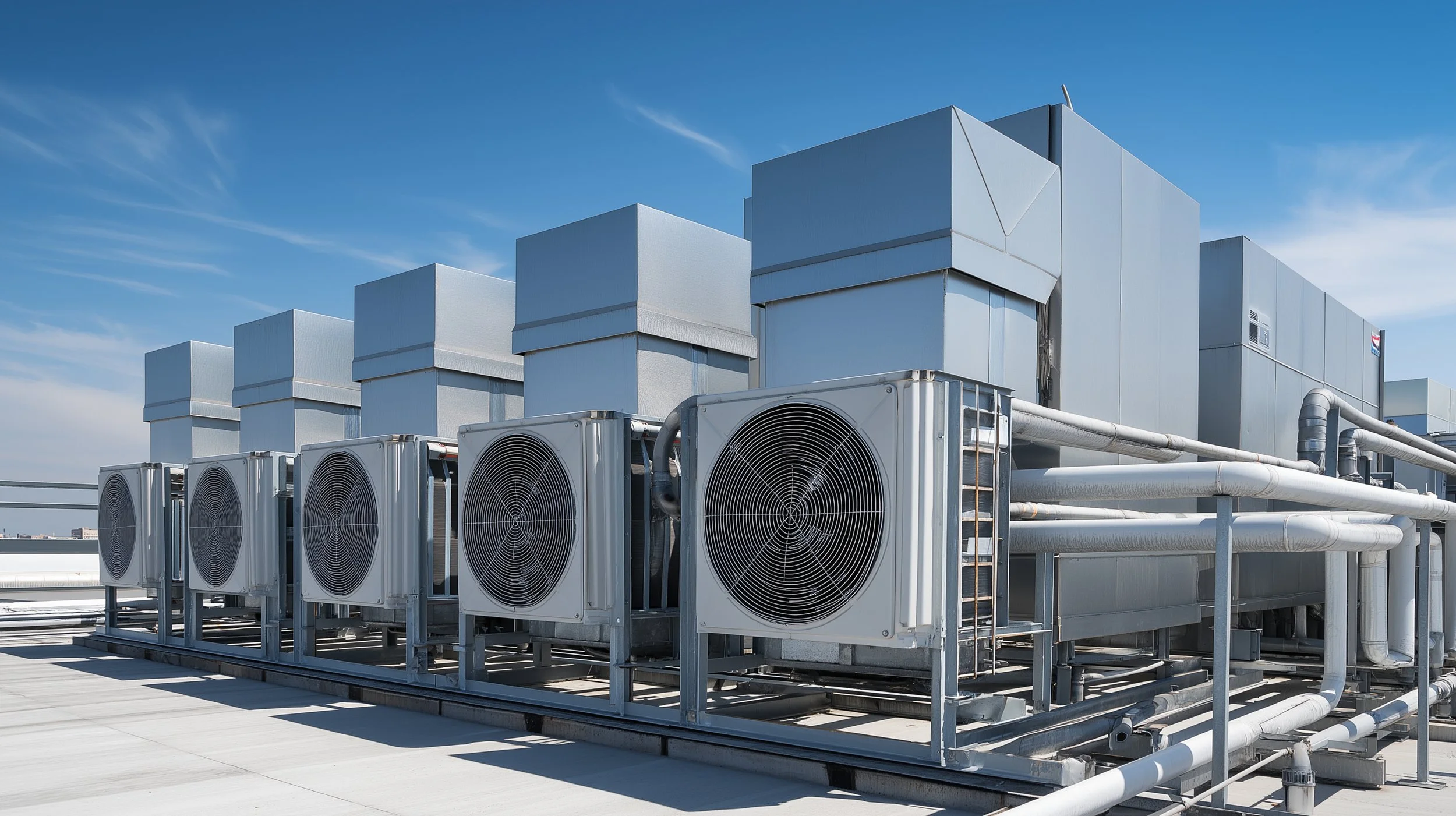
Chilled water systems: Often used in larger buildings where centralised cooling serves multiple spaces or equipment loads.
Close-control cooling: Designed for environments such as server rooms where tighter environmental control may be necessary.
The appropriate system depends on cooling demand, building layout, operating hours and the temperatures that need to be maintained.
For businesses planning an installation, our commercial air conditioning services cover system selection, installation and ongoing support.
Does Air Conditioning Provide Fresh Air?
Not necessarily.
Many standard air conditioning units recirculate air already inside a room. They cool or heat that air without introducing a dedicated supply of fresh outdoor air.
Some commercial systems are connected to mechanical ventilation equipment or include fresh-air provisions, but this depends on their design.
This distinction matters because a room can feel comfortably cool while still being inadequately ventilated.
Businesses should therefore assess ventilation separately rather than assuming that installing air conditioning automatically provides sufficient fresh air.
What Are Commercial Ventilation Systems?
Commercial ventilation systems manage the movement of air into and out of buildings.
Their primary purpose is to introduce fresh or appropriately treated air while removing stale air, excess moisture and airborne contaminants.
Ventilation can occur naturally, mechanically or through a combination of both.
Natural Ventilation
Natural ventilation relies on openings such as windows, doors and vents to allow outside air into a building.
It can be suitable for certain commercial premises, particularly where building layout, external conditions and occupancy allow adequate airflow.
However, its effectiveness varies with weather conditions and may be limited in larger or more enclosed environments.
Mechanical Ventilation
Mechanical ventilation uses powered fans and, where required, ductwork to move air through a building.
These systems can provide more controlled airflow than natural ventilation alone.
They may include supply fans, extract fans, air handling units and heat recovery equipment, depending on the application.
Larger offices, healthcare buildings and industrial premises frequently require mechanical ventilation because of their size, occupancy or operational demands.
Local Extract Ventilation
Some industrial operations produce dust, fumes, vapours or other airborne substances that require specialist extraction.
Local exhaust ventilation (LEV) captures contaminants close to their source, reducing the likelihood of them spreading through the workplace.
LEV is different from general building ventilation and must be designed around the particular substances and processes involved.
Why Cooling and Ventilation Must Work Together
One of the most common misunderstandings in commercial buildings is that controlling temperature automatically means controlling indoor air quality.
In reality, these are separate requirements.
Consider a busy meeting room with effective air conditioning but limited fresh-air supply. The temperature might remain comfortable, yet carbon dioxide levels can rise as the room becomes occupied.
Alternatively, a factory may have sufficient fresh-air ventilation but still experience excessive temperatures around heat-generating production machinery.
In both cases, solving one problem does not necessarily solve the other.
A properly considered building services strategy should account for:
Temperature control: Maintaining suitable conditions for occupants and equipment.
Fresh-air requirements: Providing sufficient outside air for the building's use and occupancy.
Humidity management: Controlling moisture where operationally necessary.
Air distribution: Delivering conditioned and ventilated air to the appropriate areas.
Energy consumption: Avoiding unnecessary heating, cooling and fan operation.
The Health and Safety Executive provides guidance on ventilation in the workplace, including employers' responsibilities for providing adequate fresh air.
Which System Does Your Commercial Building Need?
The right solution depends on the problem you are trying to address. Not every building requires a complete HVAC replacement, and adding more air conditioning will not resolve every indoor environmental issue.
Offices and Commercial Workplaces
Offices commonly require both air conditioning and ventilation.
Air conditioning helps maintain comfortable working temperatures, while ventilation provides fresh air for employees and visitors.
Larger offices may benefit from zoned temperature control, particularly where meeting rooms, open-plan areas and equipment spaces have different cooling demands.
Factories and Industrial Facilities
Industrial buildings can have more complex requirements because production equipment generates heat and certain processes produce airborne contaminants.
Depending on the operation, facilities may need industrial air conditioning, mechanical ventilation, process cooling or specialist extraction.
For manufacturing environments, industrial air conditioning solutions can help manage building temperatures, while dedicated process cooling systems address the thermal requirements of machinery and production equipment.
Server Rooms and Data Centres
Server rooms and data centres require dependable cooling to manage the heat generated by IT equipment.
Unlike typical office environments, these spaces may need tighter temperature control and cooling arrangements designed around continuous equipment operation.
Dedicated data centre air conditioning systems are therefore often more appropriate than conventional comfort cooling alone.
Retail and Hospitality Premises
Retail and hospitality buildings need to balance customer comfort, staff working conditions and adequate ventilation.
Occupancy can fluctuate considerably, so systems must be selected with changing cooling and fresh-air demands in mind.
Common Signs Your HVAC System Needs Attention
Problems with HVAC equipment are not always obvious equipment failures. Poor performance can develop gradually, making it useful to recognise early warning signs.
Common indicators include:
Uneven temperatures: Certain rooms remain too warm or cold despite thermostat adjustments.
Poor airflow: Supply or extract airflow is noticeably reduced.
Stuffy conditions: Occupied rooms feel poorly ventilated even when temperatures are comfortable.
Unusual noises: Fans, compressors or other components produce unfamiliar sounds.
Increasing energy consumption: Equipment uses more energy without a clear change in building demand.
Repeated faults: Systems require frequent resets or experience recurring breakdowns.
These symptoms do not necessarily mean that the entire HVAC system needs replacing.
For example, poor temperature control could result from incorrect settings, airflow restrictions, faulty sensors or mechanical problems.
Similarly, inadequate ventilation may relate to blocked filters, poorly adjusted controls or insufficient fresh-air capacity.
A technical assessment helps establish whether servicing, repairs, system adjustments or more substantial changes are necessary.
HVAC Maintenance vs Repair: What's the Difference?
Although closely connected, HVAC maintenance and repair serve different purposes.
Maintenance is preventative. It involves scheduled inspections, cleaning, testing and servicing intended to maintain equipment condition and identify developing problems.
Repair is corrective. It addresses faults that have already occurred, such as defective components, refrigerant leaks or equipment failures.
For commercial facilities, both are important.
Planned maintenance can help reduce the likelihood of unexpected problems, while timely repairs are necessary when equipment performance deteriorates or systems stop operating correctly.
Maintenance requirements vary between installations. A small office split system will not have the same servicing needs as a large chilled water installation supplying multiple commercial areas.
When arranging commercial air conditioning maintenance, businesses should consider equipment type, operating hours, manufacturer guidance and the operational consequences of a failure.
How to Make Better HVAC Decisions Before Upgrading
Replacing equipment without understanding the underlying problem can result in unnecessary expenditure or an installation that fails to address the original issue.
Before approving major HVAC work, facilities managers should consider several practical questions:
What problem needs solving? Is the main concern temperature, fresh air, equipment reliability or energy consumption?
Is the existing equipment suitable? A system may be functioning correctly but lack the capacity required by changes in building use.
Are the controls working together? Incorrect settings or conflicting control strategies can affect performance.
Has the building changed? Increased occupancy, additional machinery or alterations to internal layouts may change heating, cooling and ventilation requirements.
Can the existing system be improved? Maintenance, control adjustments or selective upgrades may be more appropriate than complete replacement.
For larger commercial properties, reviewing the entire system rather than individual units can reveal issues with pipework, pumps, airflow, controls and equipment integration.
This is particularly relevant when older building infrastructure must continue operating alongside newly installed equipment.
Frequently Asked Questions
Q: Is HVAC the Same as Air Conditioning?
No. HVAC covers heating, ventilation and air conditioning, whereas air conditioning primarily controls indoor temperatures. Air conditioning is one component of a wider HVAC arrangement.
Q: Can You Have Ventilation Without Air Conditioning?
Yes. Buildings can use natural or mechanical ventilation without dedicated air conditioning. Ventilation supplies fresh air, but it does not necessarily maintain comfortable temperatures during hot weather.
Q: Do All Commercial Buildings Need HVAC Systems?
Commercial buildings need suitable heating and ventilation arrangements, and cooling may also be necessary depending on building conditions and activities. The equipment required depends on occupancy, building design and operational needs.
Q: What Is the Difference Between HVAC Repair and Air Conditioning Repair?
Air conditioning repair focuses on faults within cooling or reversible heating equipment. Commercial HVAC repair may cover a wider range of connected components, including ventilation equipment, heating systems, controls and associated infrastructure.
Q: Can One HVAC System Heat, Cool and Ventilate a Building?
Yes. Integrated HVAC installations can provide heating, cooling and fresh-air ventilation through coordinated equipment. However, individual air conditioning units do not necessarily perform all three functions.
Q: How Often Should Commercial HVAC Systems Be Maintained?
The appropriate maintenance schedule depends on the equipment, manufacturer's recommendations, usage patterns and building requirements. Critical installations or systems operating continuously may need more frequent attention than equipment used intermittently.
Understanding Your Building's Heating, Cooling and Ventilation Needs
HVAC, air conditioning and ventilation systems each have a distinct role, but their performance often depends on how effectively they work together.
For commercial properties, the most useful starting point is understanding whether the priority is temperature control, fresh-air supply, equipment reliability or a combination of these requirements.
At Chilled System Solutions, we work with commercial and industrial customers on cooling, HVAC installations, chillers and ongoing system maintenance. Our Coventry-based team supports projects nationwide, including technically demanding installations and upgrades to existing building infrastructure.
If you are reviewing your building's cooling equipment, experiencing recurring faults or planning an upgrade, our team can help you understand the available options.